
Loading...
Serving Rochester, MN and surrounding areas. (507) 738-1270
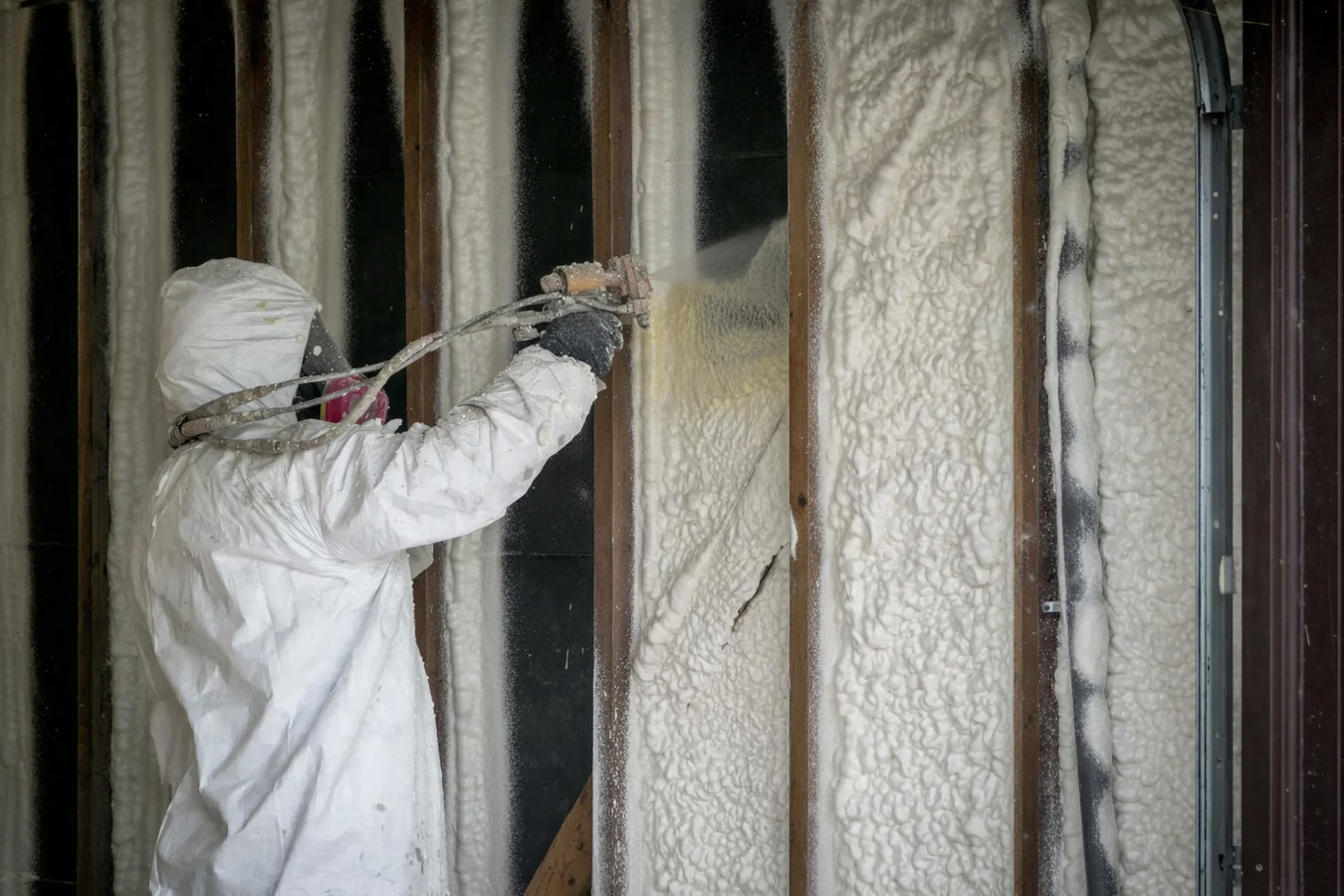
Rochester Insulation serves Austin, MN homeowners with spray foam insulation, attic insulation, and blown-in insulation in a city where most of the housing stock was built before 1970 and ice dams are a real annual problem. We have served Mower County since 2022, and our crews coordinate permits through the City of Austin on every job that requires one.
Austin's winters regularly push temperatures below zero, and cold finds every gap in a home's frame. Our spray foam insulation seals and insulates in one step, covering the rim joists above your foundation and any penetrations where cold air is entering from outside. For Austin's older wood-frame homes, rim joist spray foam is often the single highest-return upgrade available and can typically be completed in a half-day visit.
Austin sits in Climate Zone 6, where the Department of Energy recommends attic insulation between R-49 and R-60. Most Austin homes built before 1970 are well below that range, and the original insulation has often compressed down to a fraction of its original depth over decades of freeze-thaw cycling. Bringing the attic up to current standards also eliminates the heat loss that drives ice dam formation on the roof every winter.
Blown-in loose-fill material fills uneven attic joist bays completely without disrupting finished ceilings. For Austin homeowners with older homes where the attic access is tight and the joist spacing is irregular, blown-in is often the most practical way to add significant R-value in a single visit. It is also a good fit for finished walls where access is limited and removing drywall is not an option.
Adding insulation to an Austin attic without first sealing the air bypasses is like piling blankets on a bed with an open window. Austin homes built before 1970 typically have open penetrations around plumbing stacks, wiring runs, and recessed lights that let heated air pour into the attic cavity. We seal all those bypasses before installing new insulation, which is what actually stops ice dams from forming at the roofline.
Properties near the Cedar River in Austin sit on clay-heavy soils that hold moisture and push ground vapor into crawl spaces throughout the year. An uninsulated crawl space creates cold first-floor temperatures and contributes to the moisture problems that degrade other insulation over time. We insulate the crawl space perimeter and pair the work with a vapor barrier to address both temperature and moisture in a single visit.
Austin's older homes commonly have full basements with large, uninsulated rim joist sections running along the top of the foundation wall. Those rim joists are one of the coldest parts of the house in January and a primary source of the cold floors that homeowners in older Austin neighborhoods notice every winter. Spray foam on the rim joists is fast, effective, and typically completed without requiring the homeowner to vacate the house.
Austin sits in Mower County in southern Minnesota, about 100 miles south of the Twin Cities. The city averages around 40 inches of snow per year, and winter temperatures regularly drop below zero. Frost penetration can reach four feet or more below grade, putting sustained stress on foundations, concrete slabs, and any building assembly exposed to the ground. That level of cold demands more from your home's insulation than most Austin homes were originally built to provide, especially those constructed in the early and mid-1900s when insulation standards were a fraction of what they are today.
A large share of Austin's housing stock was built before 1970. These are primarily single-family wood-frame homes with full basements, original siding, and walls that were built at a time when wall insulation was minimal at best. Many still have their original attic insulation, which has compressed substantially over decades of thermal cycling. Ice dams are a recurring problem in this era of housing because the combination of poor attic air sealing and low insulation values creates exactly the conditions where heat escapes through the roof, melts snow, and refreezes at the cold eaves. This is a building performance problem, not a weather problem, and it has a straightforward solution.
Spring in Austin adds a moisture dimension to the insulation picture. Snowmelt and spring rain arrive at the same time, the ground is often still frozen underneath, and the Cedar River can raise water tables across the lower parts of the city. Clay-heavy soils in the area do not drain quickly, which means crawl spaces and basement assemblies stay under moisture pressure for weeks every spring. Insulation that performs well in dry conditions can degrade significantly when exposed to that level of persistent moisture, which is why vapor barriers and proper sealing are part of a complete approach in Austin.
Rochester Insulation has served Mower County since 2022, and our crews regularly work on Austin's older wood-frame housing stock. Most of Austin's established neighborhoods are made up of single-family homes built between 1910 and 1965, and working in these houses means knowing how to handle layered siding, older sheathing, and wall cavities that were not designed around modern insulation methods. When estimating a job in Austin, we look at the home's construction era before we open a wall or climb into the attic, because what we find inside an older Austin house is often different from what the exterior suggests.
Austin is widely known as SPAM Town USA, with the SPAM Museum on Main Street drawing visitors from across the country. Hormel Foods, which has been headquartered in Austin since 1891, is the anchor of the local economy and the reason the city has maintained a stable, working-class homeowner base for generations. The Jay C. Hormel Nature Center on the east side of town and the Cedar River that runs through the city are both landmarks that long-term Austin residents know well. Interstate 90 and U.S. Highway 218 are the main arteries in and out.
We also serve homeowners just to the south in Albert Lea, MN, where a similar mix of older single-family homes and cold-climate conditions creates the same insulation challenges. If you are in Austin or anywhere in Mower County and want a free, no-pressure assessment, call us or submit a request online and we will get back to you within one business day.
Reach us by phone at (507) 738-1270 or through the contact form on our website. We respond within one business day and schedule a free in-home visit at a time that works for you. No commitment and no sales pressure at this stage.
One of our estimators visits your Austin home, checks the attic, walls, crawl space, and rim joists, and identifies where heat is escaping and moisture is entering. You receive a written, itemized quote that covers all materials, labor, and any permit fees, so you know the full cost before you decide.
Our crew arrives on the scheduled day and completes the agreed scope. Most single-service jobs in Austin are finished in one day. Spray foam crawl space and rim joist work typically takes three to five hours; a full attic blown-in job runs five to eight hours. You do not need to be home during the work.
Before leaving, we walk through the completed work with you and answer any questions. If the City of Austin requires a permit inspection for your project, we schedule that on your behalf. We are available by phone after the job is done if any questions come up later.
Rochester Insulation serves homeowners throughout Austin and Mower County. Free in-home estimates, itemized written quotes, and no-pressure conversations every time.
(507) 738-1270Austin is a city of about 26,000 people in Mower County in southern Minnesota, sitting roughly 100 miles south of the Twin Cities on Interstate 90. The city's identity is inseparable from Hormel Foods, which has been headquartered here since 1891 and remains by far the largest employer in the area. That long-term industrial anchor has given Austin a stable, working-class homeowner base where many families have lived in the same neighborhoods for decades. Most of the residential housing is single-family detached homes, many of them built between the early 1900s and the late 1960s on modest lots with concrete driveways and full basements.
The Cedar River runs through Austin, and neighborhoods near its banks can deal with drainage issues and wet basements during spring snowmelt, when clay-heavy soils stay saturated for weeks. The city's established neighborhoods are primarily on the north and east sides of town, while newer residential areas have developed to the west. The Jay C. Hormel Nature Center on the east side offers trails and outdoor programming year-round and is a well-known local landmark. We also serve homeowners to the south in Albert Lea, MN and to the north toward Rochester, MN along Highway 218.
Austin homeowners tend to be practical about home improvement. The median home value is well below the state average, and most people here are focused on maintaining and improving their properties for the long haul rather than chasing cosmetic upgrades. Insulation fits that mindset: it reduces heating costs, prevents ice dam damage, and makes a home more comfortable through southern Minnesota's long winters. It is one of the few home improvements that pays for itself in energy savings over a predictable timeframe.
Expand-in-place foam that seals gaps and delivers superior R-value in a single step.
Learn moreKeep heat where it belongs with properly installed attic insulation built for Minnesota winters.
Learn moreLoose-fill material blown into place for fast, thorough coverage of irregular spaces.
Learn moreWhole-home insulation solutions sized to your house, your comfort goals, and your budget.
Learn moreSafe removal of old, damaged, or contaminated insulation before new material is installed.
Learn moreInsulate the floor above your crawl space to cut energy loss and prevent cold floors.
Learn moreDense-pack or injection foam fills wall cavities without major demolition.
Learn moreBlock drafts at every penetration point so your insulation performs at full capacity.
Learn moreInsulate basement walls and rim joists to eliminate a common source of heat loss.
Learn moreHigh-density foam offering the highest R-value per inch plus a built-in vapor barrier.
Learn moreLightweight, sound-dampening foam ideal for interior walls and hard-to-reach cavities.
Learn moreSeal attic bypasses before insulating to stop conditioned air from escaping through the ceiling.
Learn moreHeavy-duty plastic sheeting that keeps ground moisture out of your crawl space and home.
Learn moreProper vapor barrier placement protects insulation and framing from moisture damage.
Learn moreAdd insulation to an existing home without full gut renovation using modern retrofit methods.
Learn moreEnergy-efficient insulation systems for offices, warehouses, and commercial buildings.
Learn moreServing these cities and communities.
Rochester Insulation serves homeowners throughout Austin and Mower County. Call us today or submit a request online and we will get back to you within one business day.