Loading...
Serving Rochester, MN and surrounding areas. (507) 738-1270
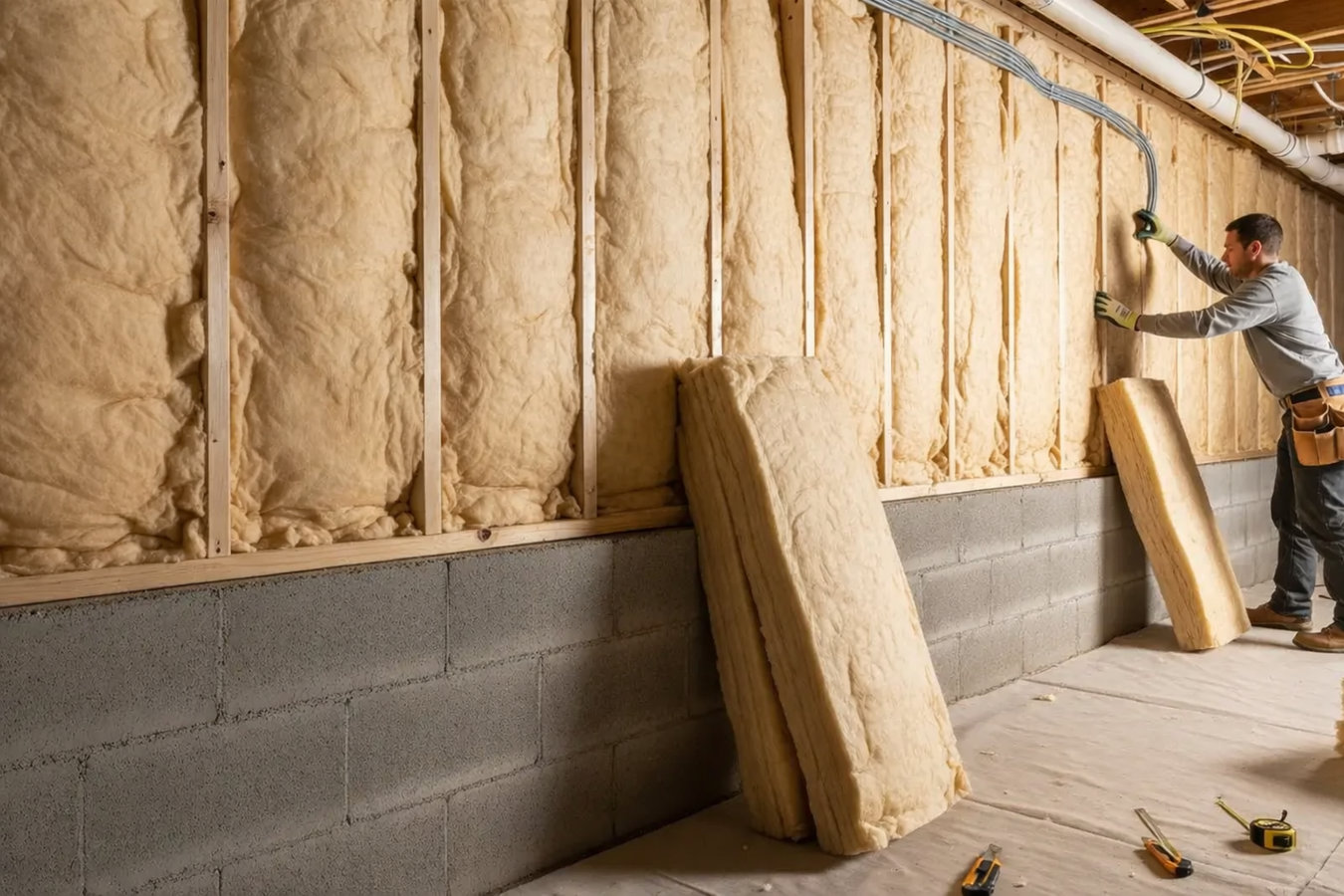
An uninsulated basement is one of the biggest sources of heat loss in a Rochester home. We seal it up so your furnace works less and your floors stay warm all winter.
Basement insulation in Rochester stops heat from escaping through foundation walls and the floor-ceiling assembly below your living space - most jobs for an average-sized home are completed in one to two days, with the home fully livable throughout the work.
Rochester winters are long and genuinely cold. An uninsulated basement can account for a large share of a home's total heat loss, driving up your gas or electric bill from October through April. Basement insulation in Rochester is not optional for homeowners who want comfortable, affordable winters. Many projects also include crawl space insulation when the home has a partial crawl space alongside the basement.
We start every project with a moisture assessment before recommending materials. Rochester's freeze-thaw cycles push water through foundation concrete every spring, and insulating over a damp wall without addressing it first creates mold problems that are expensive to fix. Call (507) 738-1270 or use the contact form to schedule your free in-home assessment.
These four warning signs are worth acting on before Rochester's next heating season.
If your energy costs jump sharply when Rochester's cold sets in and stay elevated through March, your basement is likely one of the biggest culprits. An uninsulated basement can account for a significant share of total heat loss in a home, and the savings from fixing it compound every year.
Walk across your kitchen or living room floor on a January morning. If it feels noticeably cold underfoot despite your furnace running, the basement ceiling below is not doing its job. This is especially common in Rochester homes built before the 1980s, where basement ceiling insulation was minimal or absent.
Stand in your basement and check where the concrete wall meets the wooden framing above it - the rim joist area. In older Rochester homes, this zone is often completely uninsulated and full of small gaps. If you can feel cold air moving through it, you are losing heat and potentially letting in moisture and pests.
Rochester's freeze-thaw cycles in March and April push moisture through foundation walls. A damp, musty smell signals mold or mildew growth. While insulation alone does not fix a water problem, a contractor assessing your basement for insulation will often catch moisture issues that homeowners miss.
The right approach to basement insulation depends on how you use the space and where the biggest heat loss is happening. For finished or semi-finished basements, insulating the foundation walls is typically the priority. For unheated storage basements, insulating the ceiling above keeps the living floors warm without heating a space you never use. The rim joist, the wood framing that sits on top of the concrete foundation wall, is one of the most overlooked air leakage points in any Rochester home and is part of nearly every project we do.
We use closed-cell foam insulation on basement walls and rim joists where moisture resistance is the priority, because it blocks vapor movement while it insulates. For basement ceilings, fiberglass or mineral wool batts are a cost-effective option in dry, unheated spaces. Every material recommendation comes after we have looked at your specific basement and checked for moisture conditions first.
Basements that have a partial crawl space alongside them benefit from treating both at once. Leaving one side of the foundation uninsulated while addressing the other is a common reason homeowners call back after a first project because the improvement was smaller than expected. We will point this out during the assessment so you can decide how you want to proceed.
Best for finished or semi-finished basements where keeping the basement space warm is the goal.
A practical fit for unheated basements used mainly for storage, where the priority is keeping the floor above warm.
Ideal for any Rochester home - the rim joist is one of the biggest air leakage points and one of the easiest to address.
Rochester averages around 45 inches of snow per year and regularly sees temperatures drop well below zero in January and February. The National Weather Service data for Rochester puts the city firmly in IECC Climate Zone 6, one of the most demanding heating climates in the country. That sustained cold puts enormous pressure on any uninsulated basement wall, pulling heat out of your home around the clock from November through March.
Rochester's southeast side is filled with homes built for IBM workers in the 1950s and 1960s. Those homes are now 60 to 70 years old, and many have original basement insulation, or none at all. Homes near downtown and along the older residential corridors on the city's south side face the same situation. If your home is more than 40 years old and the basement has never been updated, there is a good chance you are heating your home less efficiently than you could be. Homeowners in communities like Owatonna and Faribault face the same conditions and the same housing vintage.
Rochester's freeze-thaw cycles in March and April push moisture through foundation concrete every year. The Minnesota Department of Health consistently identifies basement moisture as a leading driver of mold in Minnesota homes. Insulating over a damp wall without a prior moisture assessment is one of the most common mistakes Rochester homeowners make when they try to DIY the project. We check for it before every installation. Homeowners in Albert Lea face similar soil and moisture conditions and benefit from the same approach.
Here is what the process looks like from first contact through installation.
Reach out by phone or the online form. We reply within one business day and will ask a few questions about your basement size and any comfort complaints so we come prepared.
We walk your basement checking for water stains, efflorescence, and air gaps before recommending any insulation. Skipping this step is how moisture problems get sealed inside walls.
You receive a written quote that breaks down materials, labor, and total cost before any work is scheduled. We note which materials qualify for Xcel Energy rebates and federal tax credits so you have the documentation ready.
Most jobs take one to two days. We clean up before leaving and walk you through the finished work. You should see even, consistent coverage with no visible gaps before signing off.
Free in-home assessment. Written quote before any work starts. We reply within one business day.
(507) 738-1270We assess for water intrusion signs before touching any insulation material. Rochester's freeze-thaw cycles make this non-negotiable, and it is something too many contractors skip.
We pull permits when required and coordinate inspections, so the work is documented and your home's records stay clean. You get a written record of what was installed and where at every step.
Xcel Energy serves much of Rochester and offers rebates for qualifying insulation upgrades. We provide the material documentation you need to claim the federal tax credit and utility rebates after the job is done.
Rochester's southeast neighborhoods are filled with 1950s and 1960s homes originally built for IBM workers. We know that housing stock and what it takes to bring those basements up to current performance standards.
Rochester's housing stock ranges from early 1900s Craftsman homes near downtown to newer subdivisions on the southwest side. We have worked in basements across that entire spectrum and understand what Climate Zone 6 demands from insulation materials. An experienced crew, a moisture-first approach, and written documentation at every step - that is what every project includes.
The highest-performing insulation choice for Rochester basement walls - seals moisture and air in one application.
Learn moreIf your home has a crawl space adjoining the basement, insulating both at once prevents residual heat loss and moisture migration.
Learn moreInstallation slots fill up fast as fall approaches. Call today or submit the contact form and we will get back to you within one business day.