Loading...
Serving Rochester, MN and surrounding areas. (507) 738-1270
Your Rochester building is losing heat through its roof, walls, and foundation every winter. We install commercial insulation that meets Minnesota's energy code and keeps your building comfortable from November through March.
Commercial insulationin Rochester slows heat transfer through your building's walls, roof, and floor systems - most projects for single-story commercial spaces wrap up in one to three days and allow the business to stay open throughout the work.
Rochester's winters are among the most demanding in the continental United States. A commercial building without adequate insulation is not just uncomfortable - it is expensive to operate every single month from November through March. For buildings along the older commercial corridors near downtown or off Broadway, where many structures date from the 1950s through 1980s, the gap between what was installed and what the climate demands is often significant.
Commercial insulation also pairs well with spray foam insulation for high-performance envelopes, and with home insulation services for residential units in mixed-use buildings.
Rochester winters are long and punishing, and energy bills should reflect the season - but there is a difference between normal seasonal increases and bills that seem out of proportion. If your heating costs have climbed year over year without a clear explanation, or if they are noticeably higher than similar buildings nearby, inadequate insulation is one of the first things worth checking.
If one corner of your building is always cold in January, or one section of your warehouse never cools down in July, the insulation in that area is not doing its job. Uneven temperatures across a commercial space almost always point to gaps in coverage - either because the insulation was installed unevenly or because it has degraded over time.
Rochester's below-zero wind chills push cold air through any gap in your building's envelope. If employees can feel a draft near an exterior wall, an electrical outlet, or where the ceiling meets an outside surface in winter, that is air infiltration. It means gaps exist that insulation and air sealing could close.
Buildings constructed before the mid-2000s were built to energy standards significantly less demanding than what Minnesota requires today. Rochester's commercial corridors - particularly near downtown - have a high concentration of these older buildings. If your space has never been assessed, there is a strong chance it is operating with insulation levels that were adequate decades ago but are leaving money on the table now.
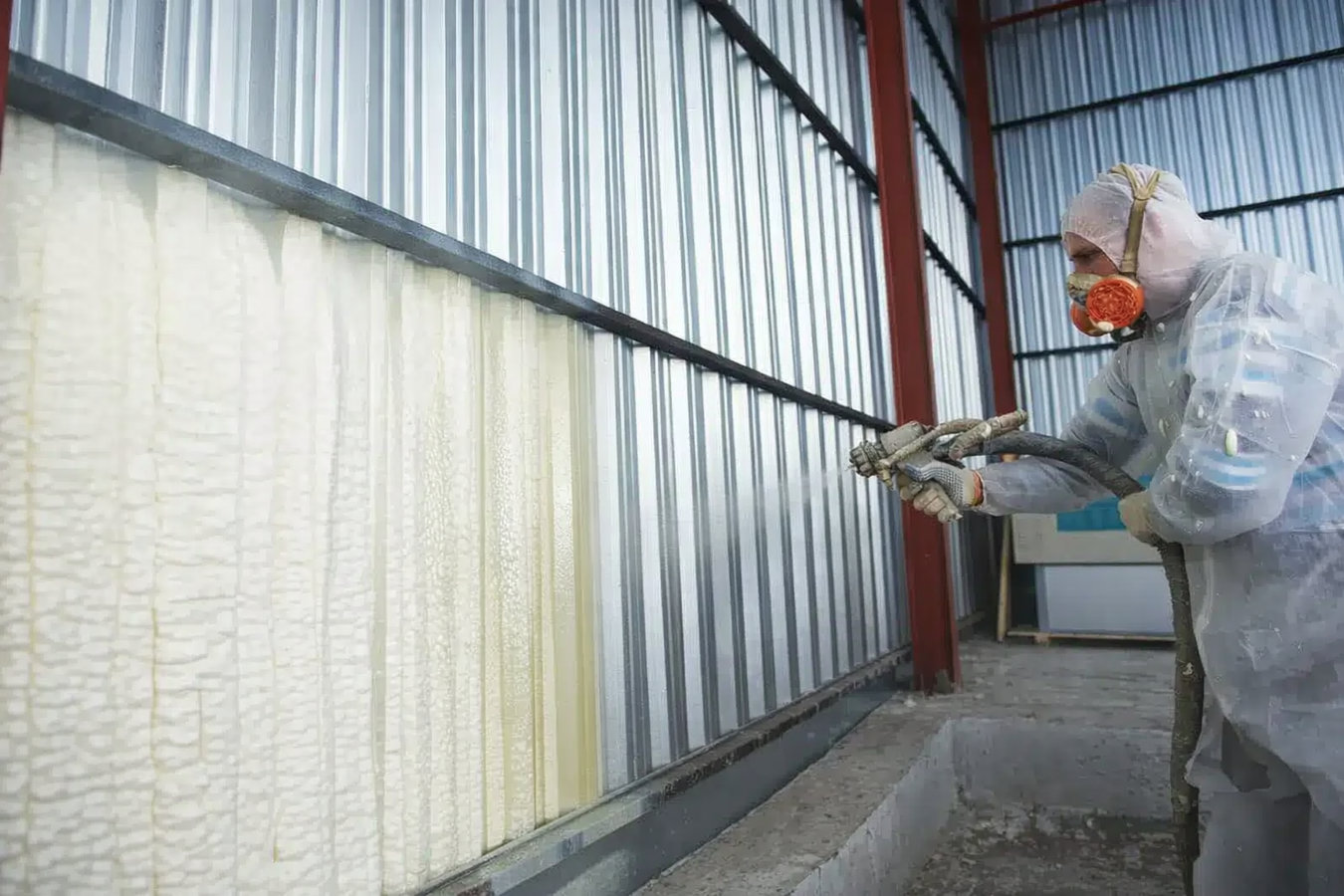
Commercial buildings in Rochester use one of three primary insulation materials depending on where the work is going and what the space is used for. Spray foam creates an air-tight seal in areas like rim joists, roof decks, and wall cavities where both insulation value and air sealing are needed at once. We use spray foam insulation on commercial projects where performance requirements are highest or where the building envelope has irregular geometry that blown-in fiber cannot fully fill.
For attic spaces, flat-roof assemblies, and large open cavities, blown-in fiber - fiberglass or cellulose - is the most cost-effective option. It installs quickly, provides uniform coverage across large floor areas, and meets Minnesota's commercial energy code minimums for Zone 6. When clients are managing mixed-use properties, we coordinate commercial and home insulation work in the same visit where possible to reduce scheduling overhead.
Rigid foam board is the material of choice for below-grade applications - foundation walls, under concrete slabs, and areas where moisture resistance is as important as thermal performance. Rochester's freeze-thaw cycle and clay-heavy soils make rigid board a practical choice for basement-level commercial spaces that deal with seasonal moisture pressure from the ground.
Best suited for high-performance commercial projects where air sealing and insulation value must be addressed simultaneously in a single application.
Ideal for commercial attic spaces, large flat-roof assemblies, and open cavities where coverage speed and cost-effectiveness are the primary considerations.
Suits Rochester commercial spaces at or below grade where moisture resistance is as important as thermal performance during the city's wet spring cycles.
Rochester sits in Climate Zone 6 under the federal energy map, meaning it experiences some of the harshest winter conditions in the continental United States. Minnesota's average January low in Rochester hovers around 4 degrees Fahrenheit, and wind chills push well below zero on multiple days each winter. The commercial energy code here requires higher insulation levels than most of the country, and a building that was adequate in a warmer climate would be significantly undersized in Rochester.
Rochester's commercial building stock creates specific challenges. The older corridors near downtown and along Broadway include many buildings constructed in the 1950s through 1980s, before modern energy codes existed. These structures were often built with minimal wall insulation and limited attic coverage. Rochester's economy also includes a high concentration of medical office buildings, research facilities, and specialty commercial spaces tied to Mayo Clinic - environments where dust control and material selection during installation must be held to a higher standard than a typical retail space. Businesses in Owatonna and Mankato face comparable climate and building stock challenges, and we serve both markets.
Rochester averages more than 50 freeze-thaw cycles per year, and each one puts stress on the joints and seams where insulation meets the building structure. For commercial buildings over 15 years old, this means gaps that were not there originally may have opened up over time. Business owners in Eau Claire deal with the same seasonal cycling and benefit from the same assessment-first approach we apply in Rochester.
Call or submit our contact form and we respond within one business day. The first conversation is short - building type, approximate size, and what is prompting the call. We then schedule an on-site visit at no charge.
We walk through your building - attic spaces, mechanical rooms, accessible wall cavities - to assess what is in place and where the gaps are. We may use a thermal camera to find hidden leaks. You receive a written estimate that breaks down scope, materials, and total cost before any commitment is required.
If the project requires a permit through the City of Rochester's Building Safety Department, we handle the paperwork before the crew arrives. Most commercial insulation renovations in Rochester require a permit, and we know exactly what is needed for your building type.
The crew sets up containment as needed, works through the building systematically, and walks you through the finished areas before leaving. You receive documentation of what was installed - material type, coverage area, and thickness - useful for energy audits, building sales, or warranty claims.
We respond within one business day. Written estimate provided after an in-person assessment - no phone quotes, no pressure.
(507) 738-1270We pull the permits your commercial project requires and coordinate inspections with the City of Rochester, then hand over written documentation of the scope, materials, and coverage installed. That paper trail keeps your building records clean and gives you accountability if anything needs to be reviewed later.
Rochester has 12 service areas we actively work across, including the older commercial corridors downtown and near the Mayo campus where building construction from the 1950s through 1980s is the norm. We know what these buildings look like inside - original framing, missing or degraded insulation, and air leakage patterns specific to that era - and we factor all of it into our estimates.
Minnesota's commercial energy requirements are more demanding than most states, and navigating them on your own is confusing. We know exactly what is required for your building type under the current code and handle the permits, inspections, and documentation so you have proof the work was done correctly - useful if you ever sell the property or apply for financing.
One of the most common concerns we hear from Rochester business owners is that an insulation project will mean shutting down. In most cases it does not. We work around your occupied spaces, contain dust and debris to the work areas, and schedule the most disruptive tasks for early morning or after hours when requested. Your customers and employees experience minimal disruption in the majority of our commercial projects.
We do not quote commercial work by phone. Every estimate starts with an in-person building assessment, because the details that determine what your project actually requires - building age, current coverage, access conditions, and code requirements - cannot be captured in a conversation. That commitment to accuracy is how we avoid surprises and deliver work you can rely on.
Closed-cell and open-cell spray foam for commercial building envelopes - highest R-value per inch and an integrated air seal in one application.
Learn moreWhole-home insulation services for Rochester's residential properties, including mixed-use buildings that combine commercial and living spaces.
Learn moreContractor schedules fill quickly before the cold season hits. Reach out today to lock in a project date and stop paying to heat the outdoors all winter.